PT
Dye Penetrant Testing
Highlights surface-breaking flaws on non-porous materials using a penetrating dye and developer.
- Method code
- PT
- Materials
- Non-porous metals and non-metals
- Product forms
- Castings, forgings, welds, machined parts
- Standards
- EN ISO 3452, ASTM E1417
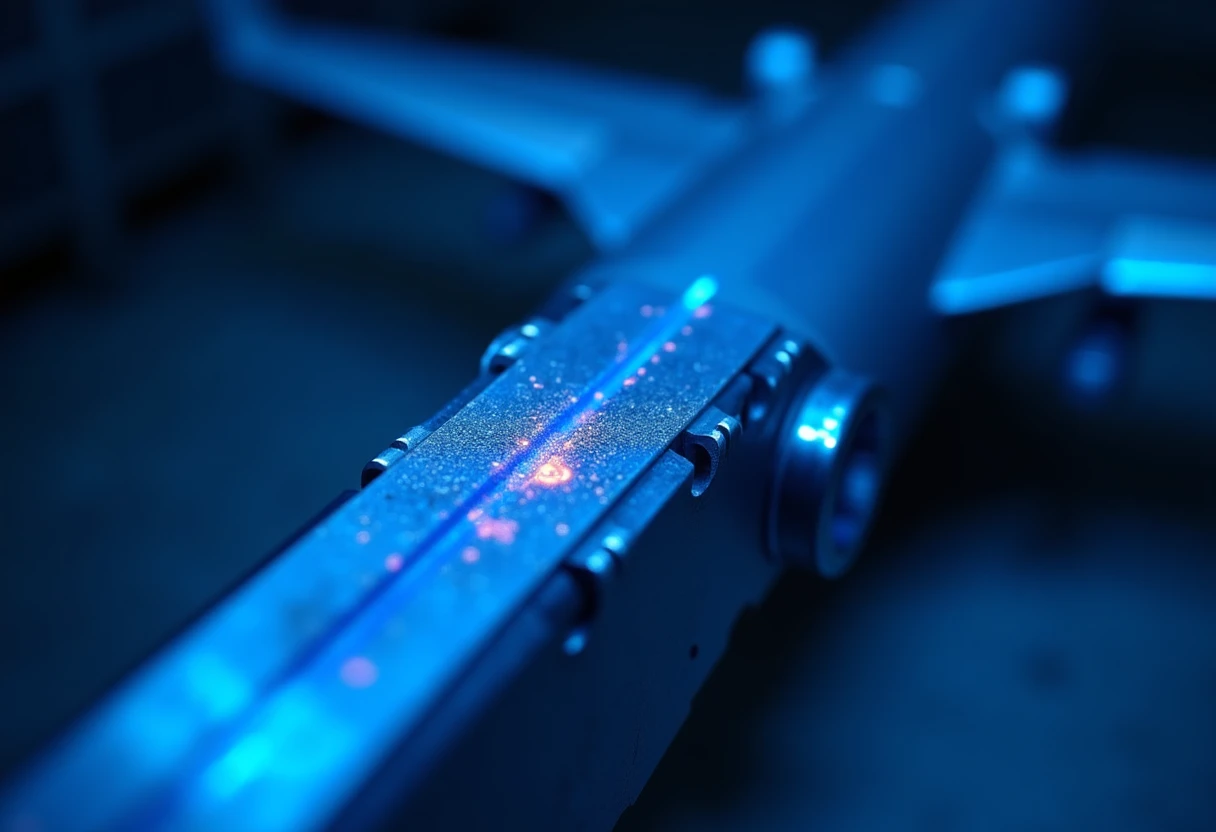
Dye penetrant testing reveals surface-breaking flaws in almost any non-porous material, including the aluminium and titanium alloys that magnetic methods cannot examine.
How it works
A penetrant is applied to a clean surface and left to dwell, during which capillary action draws it into anything open to the surface. The excess is then removed and a developer is applied, which draws the trapped penetrant back out and spreads it into a mark far wider than the flaw that holds it. Fluorescent penetrants are read under ultraviolet light; colour contrast penetrants show as red against a white developer.
What it detects
Surface-breaking discontinuities only, but with no restriction on the material: fatigue and stress corrosion cracks, porosity, laps and seams, cold shuts in castings, and lack of fusion at the surface of welds.
Typical applications
Aluminium and titanium components, castings and forgings, welds in non-ferrous material, and finished machined parts. It is often used alongside magnetic particle inspection so that a mixed batch can be covered by the appropriate method for each material.
Sectors this method is used in

Other testing methods
Aircraft on the ground
Rapid Aircraft on Ground response to keep your aircraft safe and your operation moving.
Find out more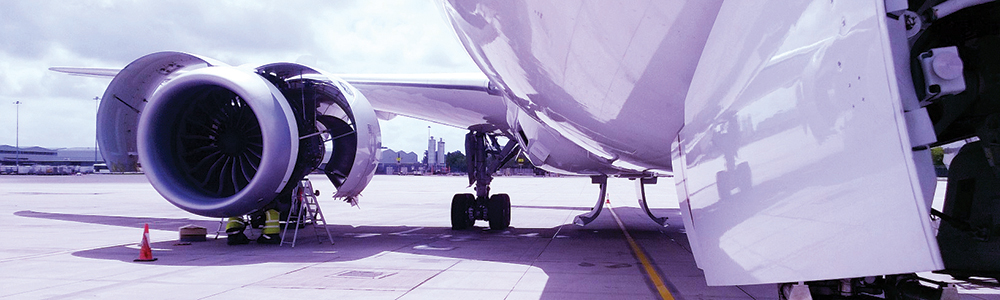
Magnetic Particle Inspection
Reveals surface and near-surface defects in ferromagnetic parts using magnetic fields and fine particles.
Find out more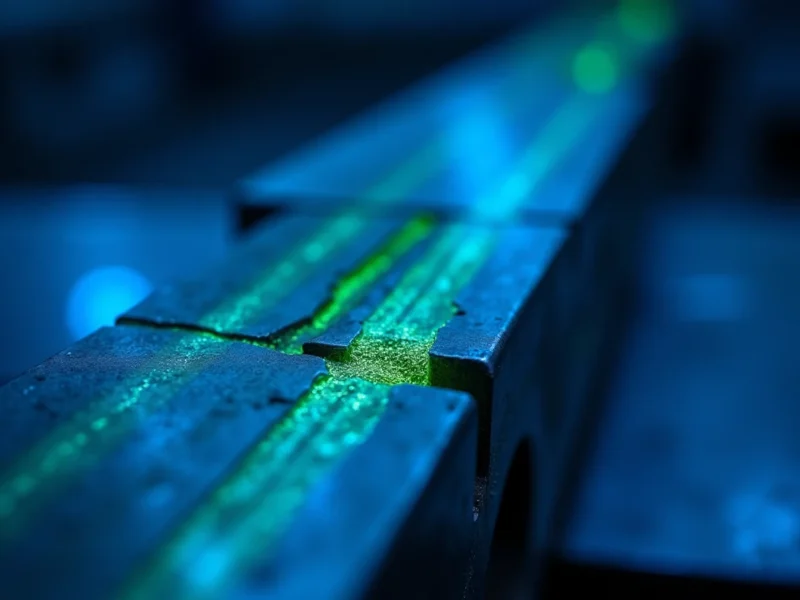
Ultrasonic Inspection
Uses high-frequency sound waves to detect internal flaws and measure material thickness.
Find out more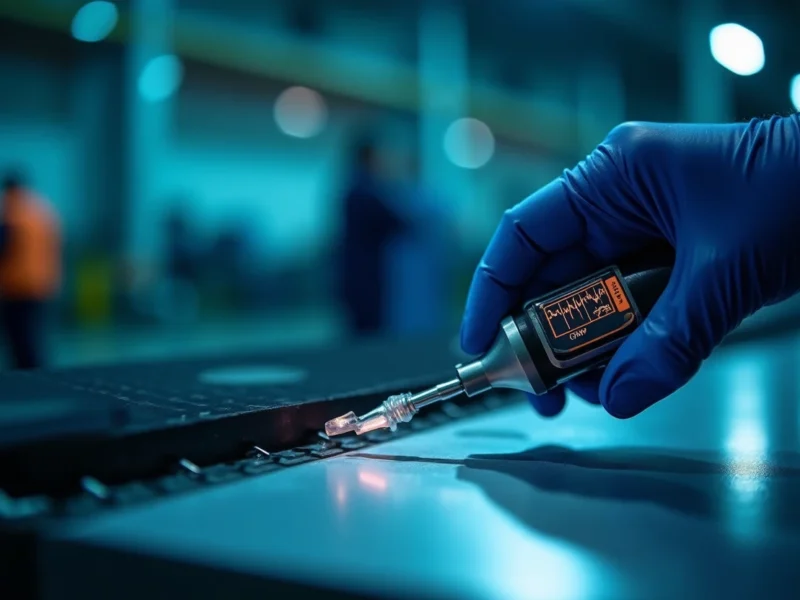
Phased Array Testing
Advanced ultrasonics using multi-element probes to build detailed cross-sectional views of a part.
Find out more
Where to next
Approvals
The approvals we hold for NDT inspection on all aircraft types, materials and structures.
Find out moreServices
The full range of non-destructive testing methods we carry out, in the laboratory and on site.
Find out moreIndustries
The sectors we test for, from aerospace to petro-chemical and industrial.
Find out moreContact
Speak to the sales team, or reach any of our offices 24 hours a day for AOG support.
Find out more
Ready when you are
Talk to our inspection team
Tell us what needs inspecting and we will tell you how we would approach it, what it will cost and how quickly we can be there. No obligation, and you speak to an engineer rather than a call centre.
Aircraft on ground? The AOG line is answered around the clock, every day of the year.